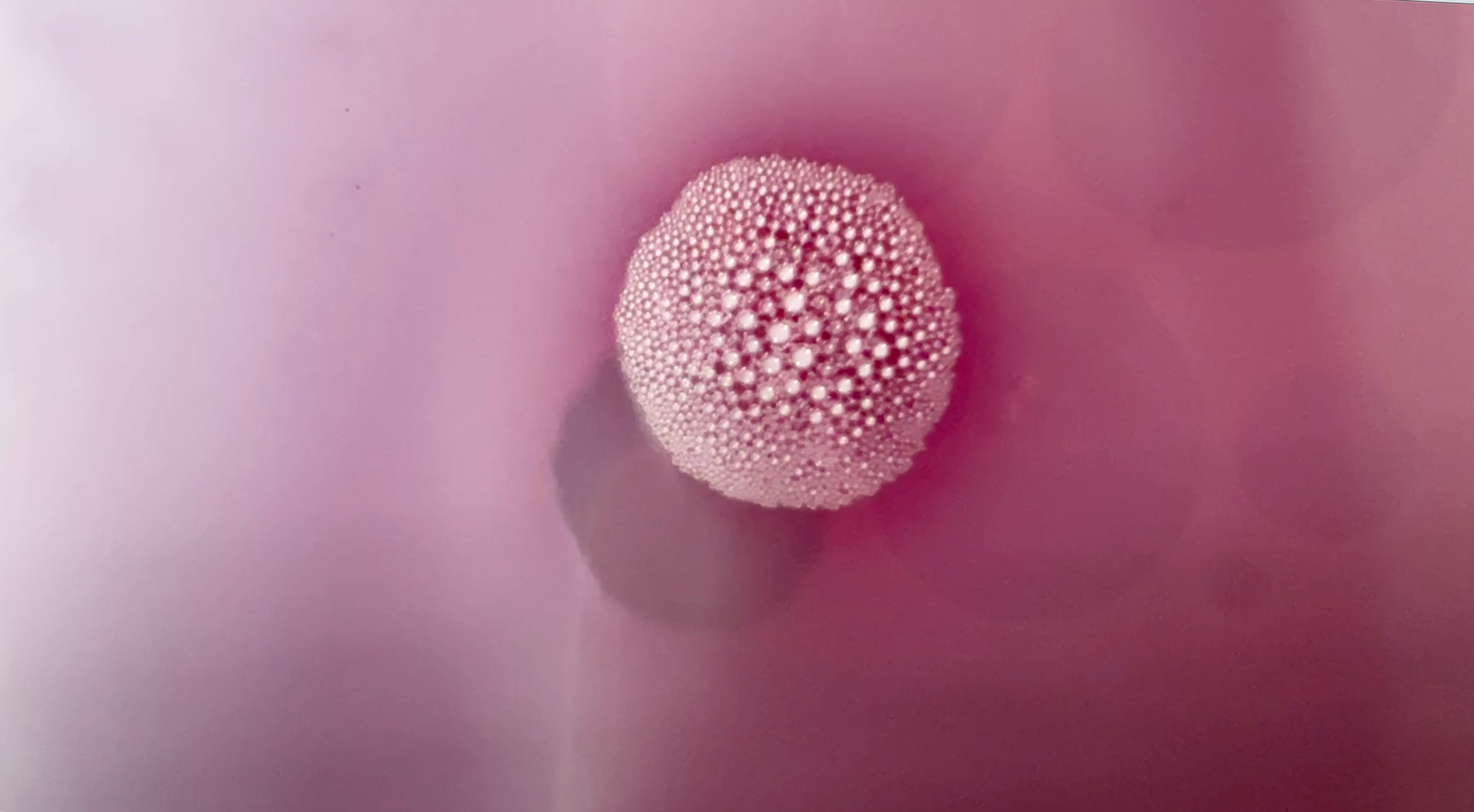
During the deep Maine winter of 2024, I began experimenting with slime mold in my studio. There were no actual slime molds present: the experiment was to see what might happen if I invited the intelligence of slime mold to come create with me.
Slime molds have become scientific rock stars because they repeatedly challenge our assumptions about intelligence. They have outperformed human engineers and helped NASA map dark matter. They can also somehow shift from countless individual cells into a single, visible superorganism that thinks, moves, and hunts as one before dissolving back into countless independent lives. This ability to change states of being fascinated me.
Possible self-portrait of erupting spore.
Humans love to observe. But I was hoping for collaboration. What could I learn from a being that can shift so effortlessly between solitude and collective intelligence? Instead of settling for inspiration, could I ask for direct instruction?
So one Tuesday morning I stood in my studio and asked, aloud, if the intelligence of slime mold would come create with me.
Many surprises ensued.
I quickly became obsessed with the forces slime molds use to eject their spores and spent days sketching, sculpting, and making videos around sporulation. Simultaneously, I found myself compelled to cover my glass tabletops with dense bilateral drawings unlike anything I had made before.
One morning I woke up utterly, entirely left-handed, with an unmistakable feeling of euphoria. The shift lasted only a day.
One dark afternoon I sprayed Goo Gone onto one of the endless bilateral drawings, walked away, and returned to find... a large spore—or at least something far more spore-like than I could draw. Then more spores emerged. Then more. Then more again.
Soon afterward, out of a tangle of my scribbles, an entire slime mold fruiting body appeared.
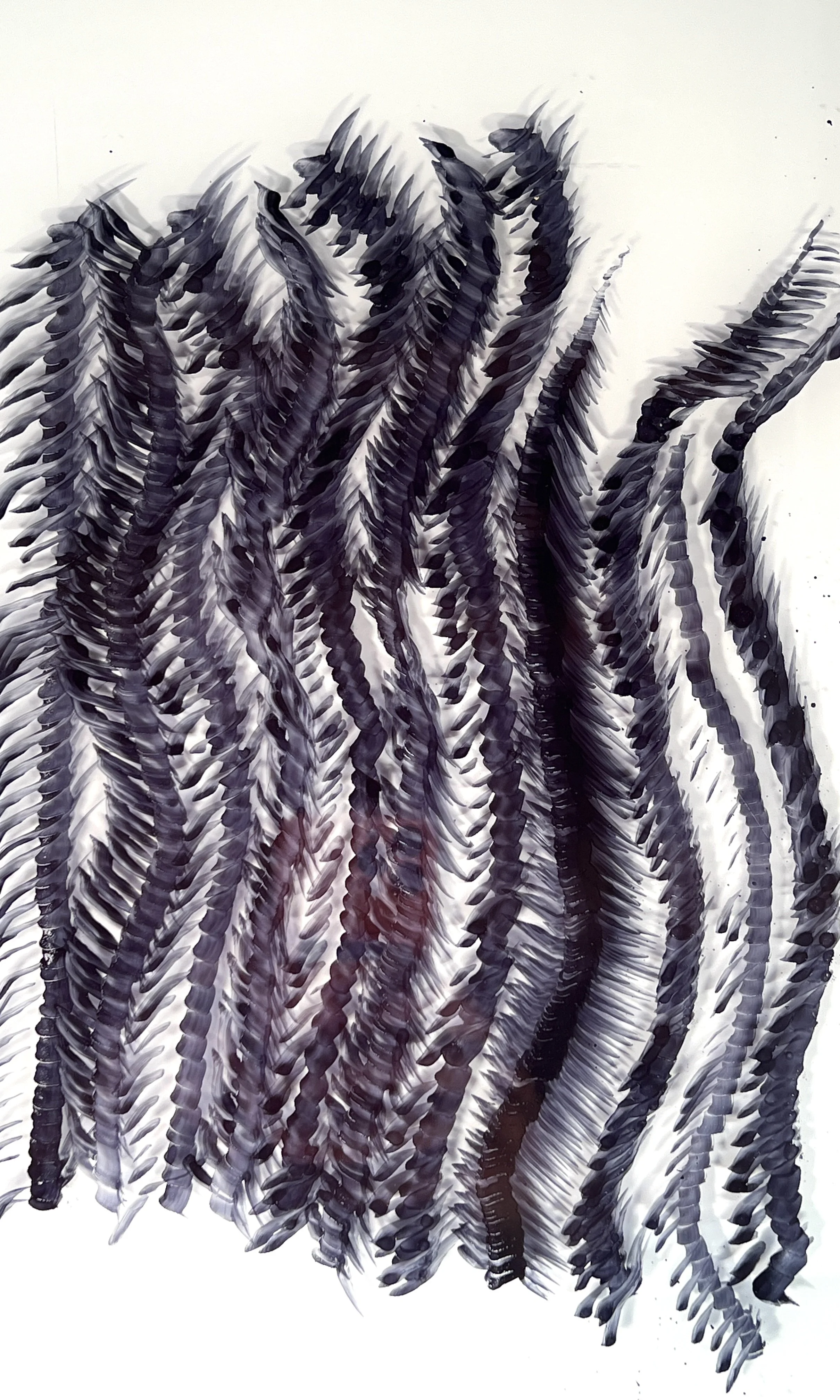
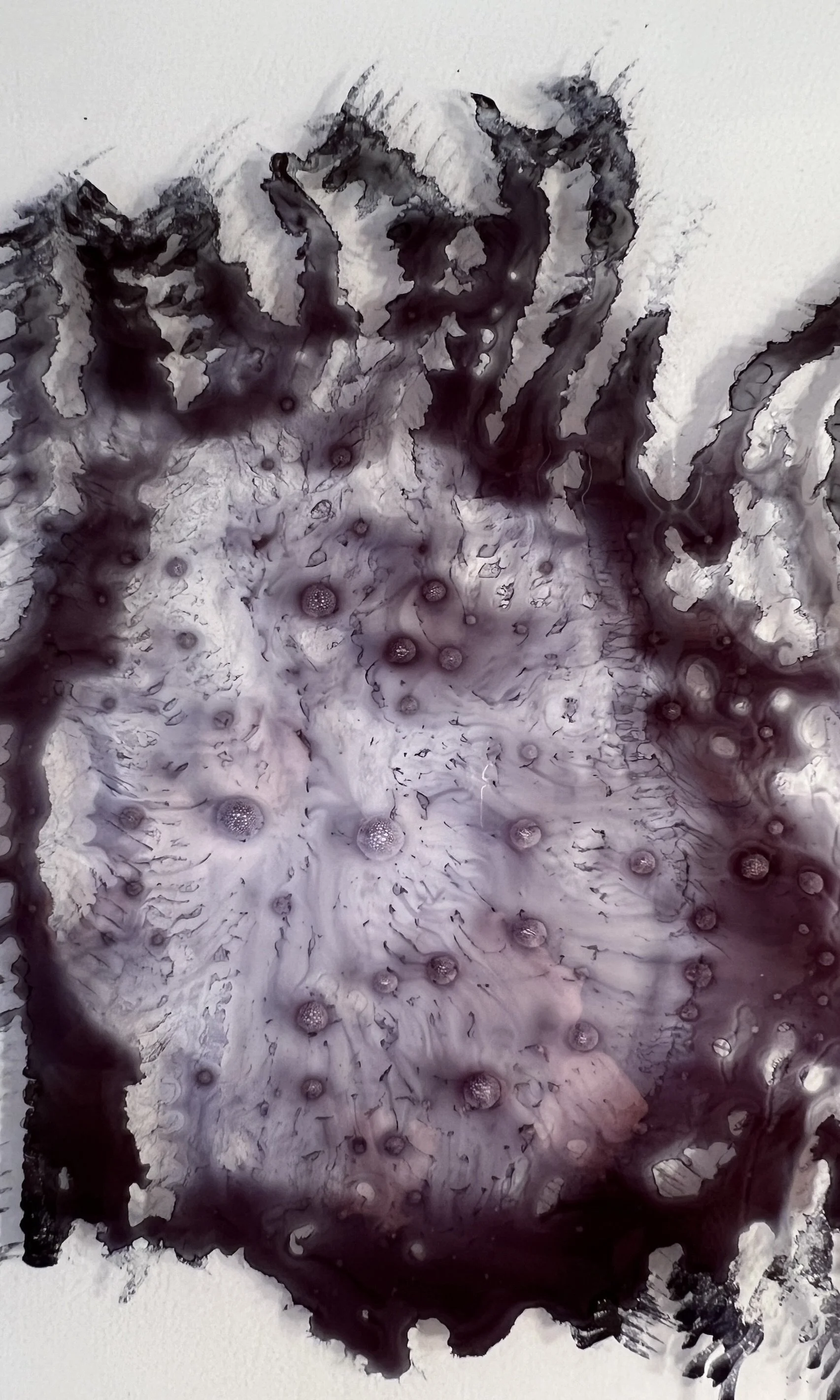
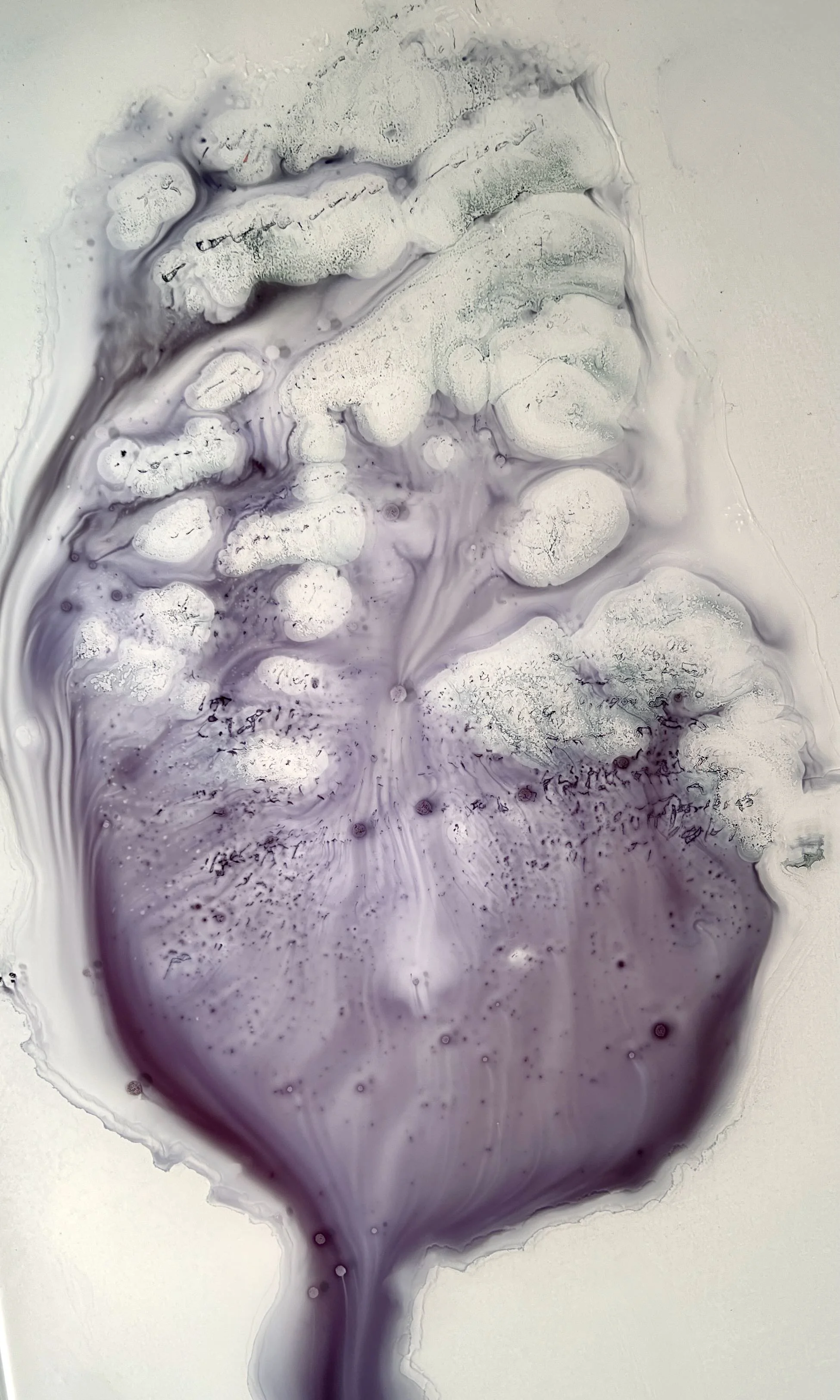
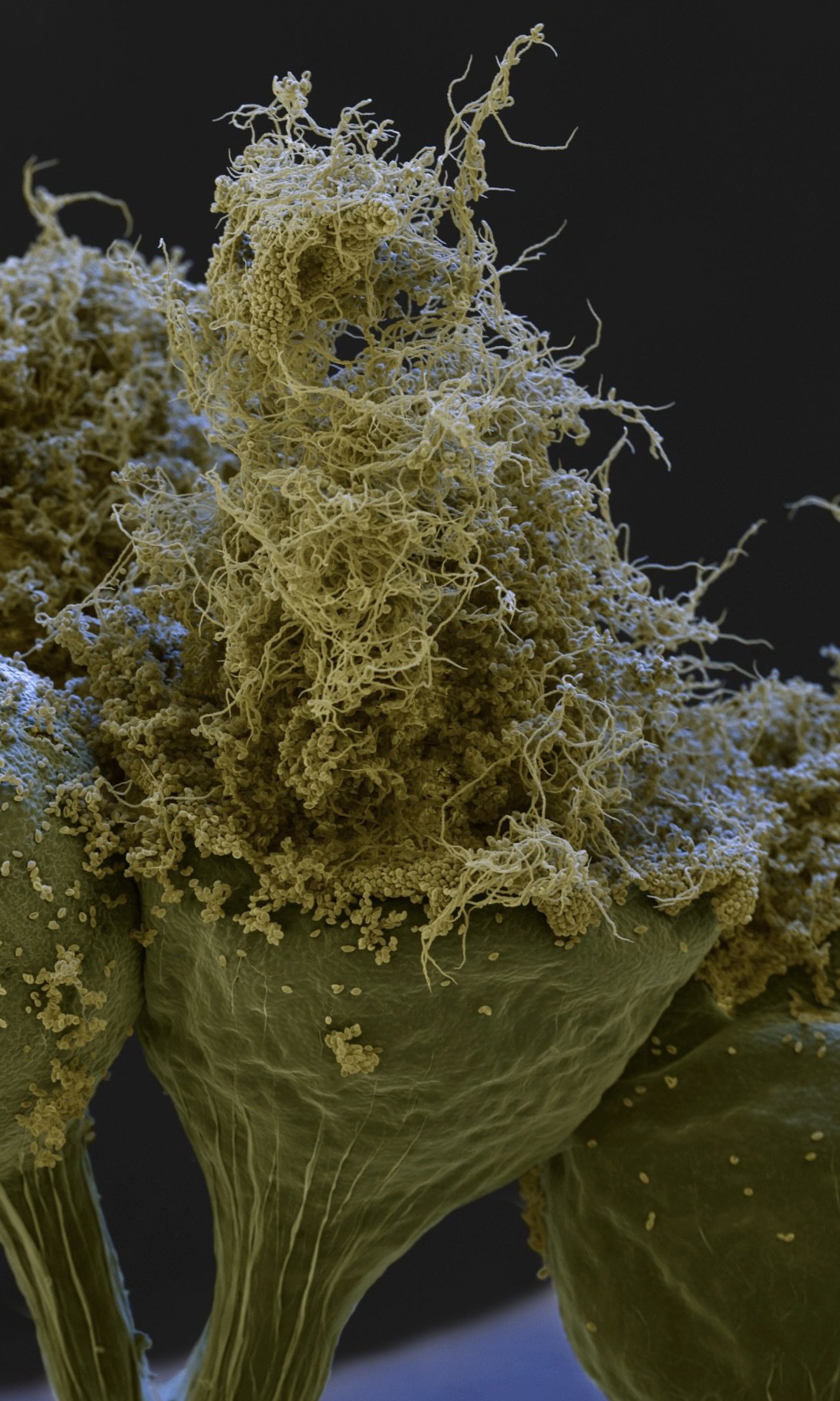
The performance lasted for nearly two hours. Individual spores slowly floated upward, emerging from the fruiting body and floating off one by elegant one.
Did the intelligence of slime mold teach me how to shift between individuality and collective intelligence? I honestly don't know. Shortly after this experiment, I did became deeply compelled to investigate how human groups think, perceive, and solve problems differently than individuals—a question that now sits at the heart of my participatory installations.
But one thing seems certain: somehow, during a long winter in Maine, I got my ass kicked in drawing by a slime mold.