The Classroom of Natural Intelligence is a participatory experiment held in Hopkins Memorial Forest at Williams College in 2026.
At first, it seems oddly simple: a low, forty-five-foot-diameter wall of loosely woven branches circling a ring of trees in Hopkins Forest. Inside the wall is a circle of low seats and notebooks, where I facilitate sixty-minute sessions for small groups.
There is, however, more going on than meets the (human) eye.
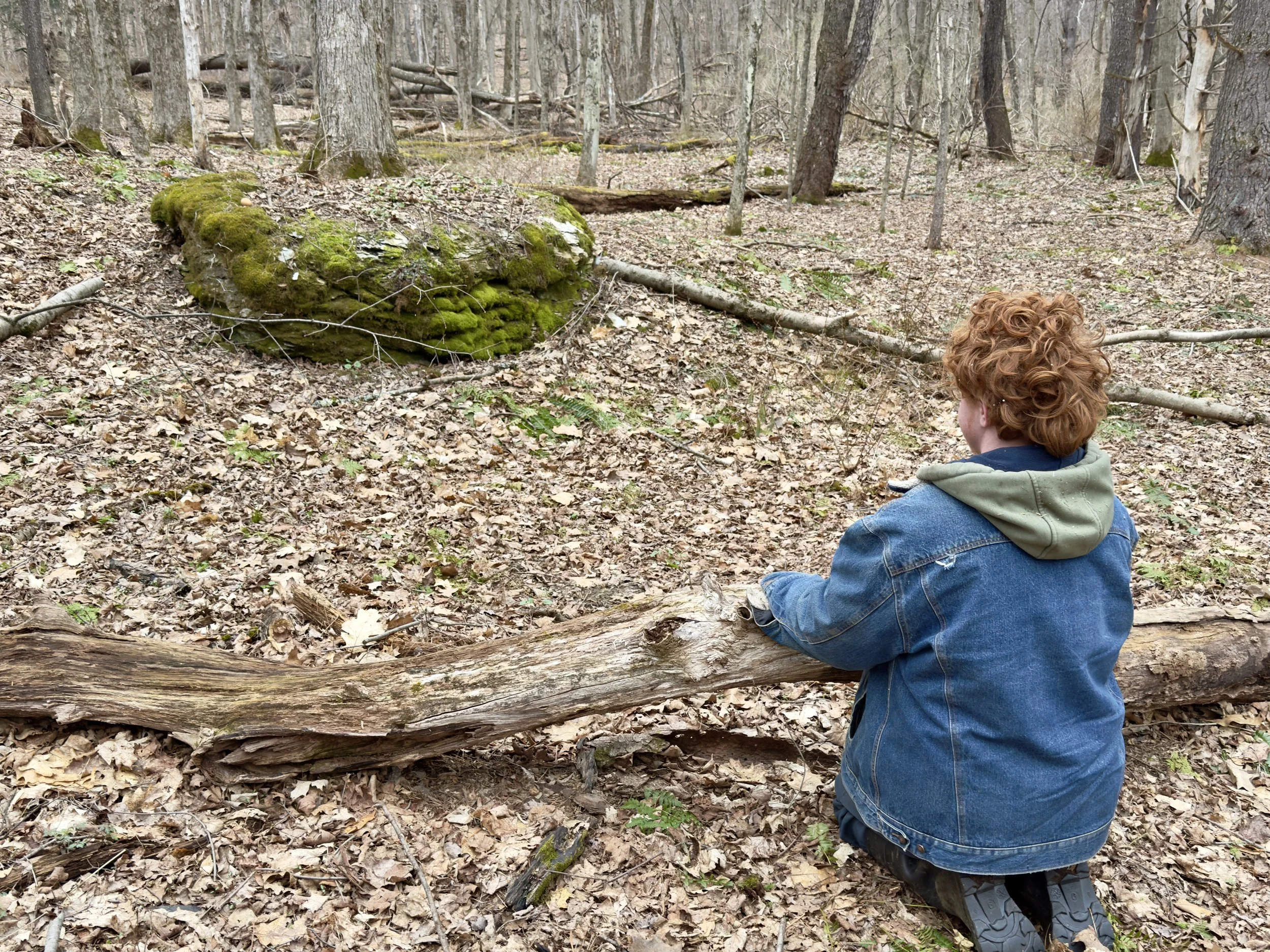
The Classroom explores how our thinking—and our knowing—change when we ask to collaborate with other-than-human beings on practical matters. It is designed in part for a college audience: professors and students use the piece to seek new perspectives on questions related to their coursework. It is also designed for community members seeking insight into how to show up for the land where they live.

Almost a decade ago, I began exploring interspecies collaboration and encountered a book by research scientist Monica Gagliano, PhD. In it, she describes an experience in which a plant gave her what amounted to a complete experimental design: what question to ask, which plant to work with, the dimensions of the equipment, and how to assemble it.
She followed the clear instructions—moving beyond anthropocentric ways of knowing, which is much easier said than done—and arrived at startling and wildly unexpected results. The resulting peer-reviewed research offered empirical evidence of a capacity Western science had long insisted plants could not possess.
Well, I thought. That’s efficient!
It’s also wonderfully encouraging. I am quite unconvinced that human ingenuity alone is enough to negotiate the planetary mess we have created. If plants can offer detailed, practical guidance that radically changes our understanding, what other guidance from other species might be available? And how might ordinary humans become better able to receive it?
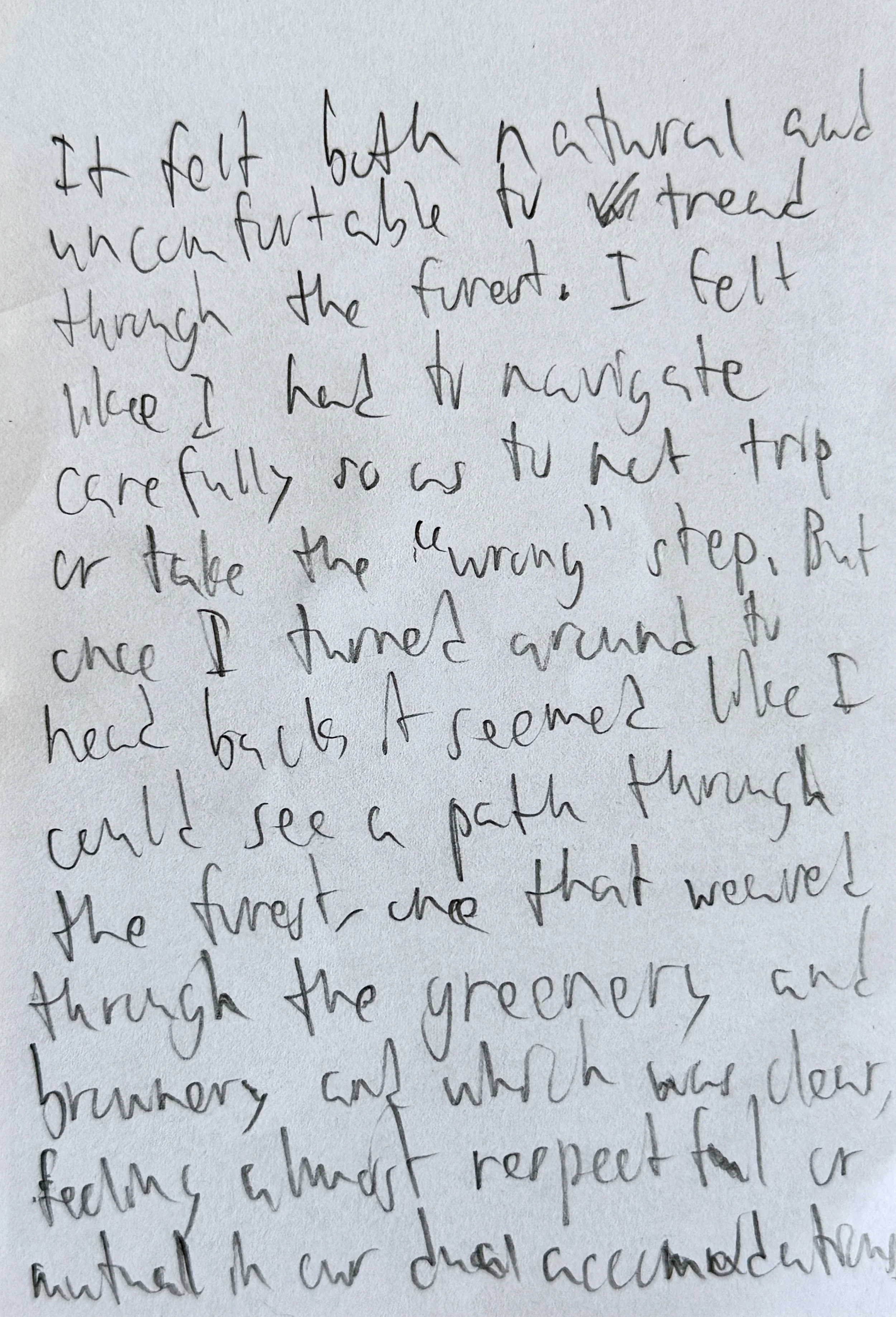
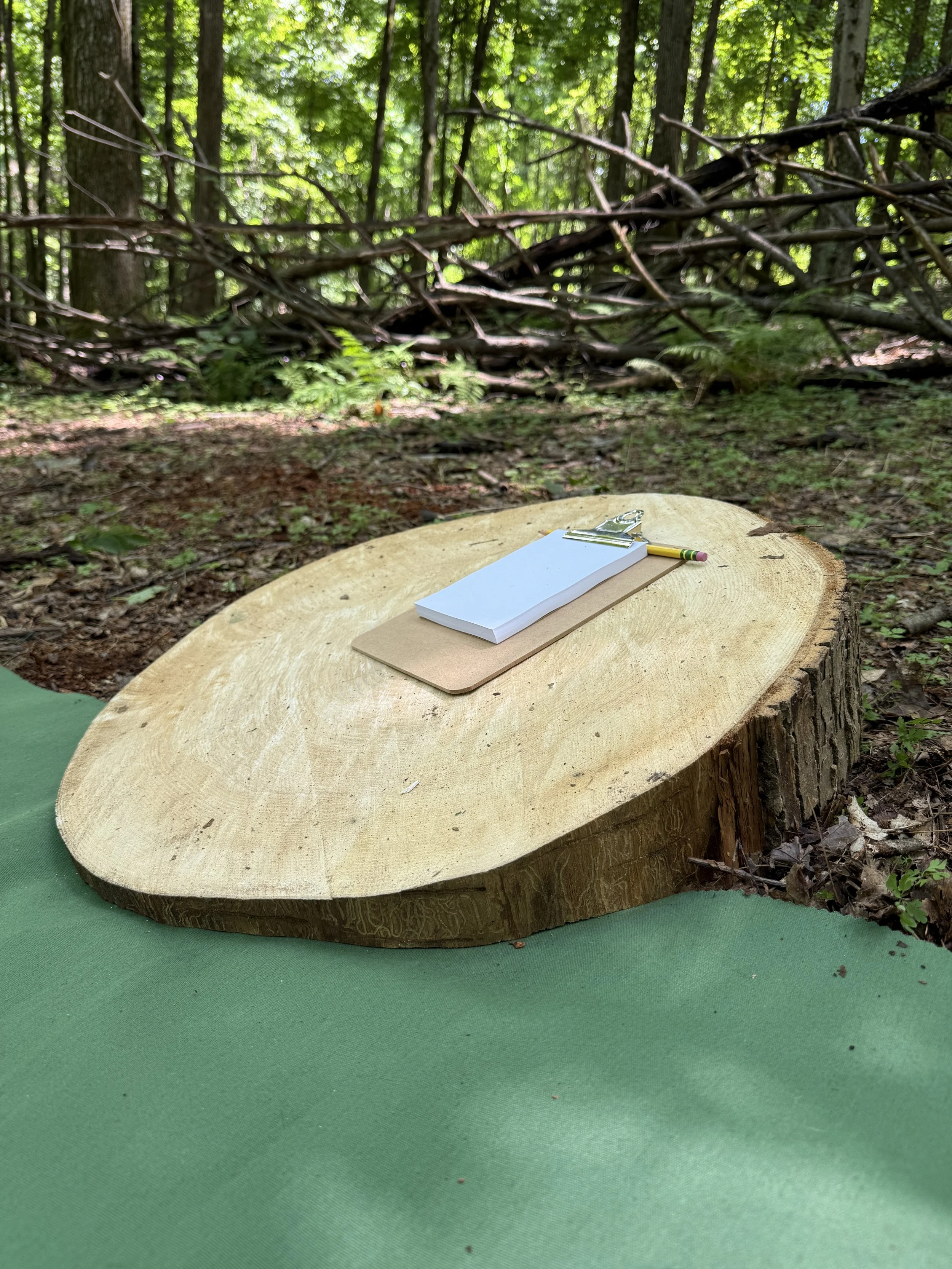
Designing the installation was itself an experiment in interspecies collaboration. Last winter, I made more than one hundred consecutive daily visits to the trees hosting The Classroom. I asked whether they were willing to host it and sought their permission, input, and collaboration.
Over those visits, both the physical and conceptual aspects of the project became clear to me. The woven ring of branches encircling the trees was definitely not my idea; my original vision was much fussier and more human-centric.
The group of trees also directed me back to an earlier fascination with collective intelligence, sparked by a joyful collaboration with slime mold intelligence. That guidance shaped the installation’s programming. It also produced a fairly neat trick that still makes me laugh: my conversations with a collective of trees led to an installation that creates conditions for collectives of people to experiment with conversing with collectives of trees.
I think I see where they are taking this....
All in all, this is very much an experiment. Test sessions have yielded fascinating results, but of course, I have no idea what will happen. There are two critical questions at the heart of the piece. The first: have I successfully done my part to build a collaborative relationship with trees so that sitting in this particular circle will impact people differently than sitting anywhere in the forest? Is this circle truly a place that helps people be more porous to communication? The second: does creating a group field with a shared intention shift us into different, more expanded ways of communicating and receiving information?
What becomes possible when people—many of whom may never have considered interspecies communication—enter a carefully held collective field and listen together? What helps communication happen? What gets in the way? And can thinking, listening, and knowing together—with the other-than-human world and also with each other—allow us to think larger, hear better, and know and create tangible solutions more wisely than we ever could alone.
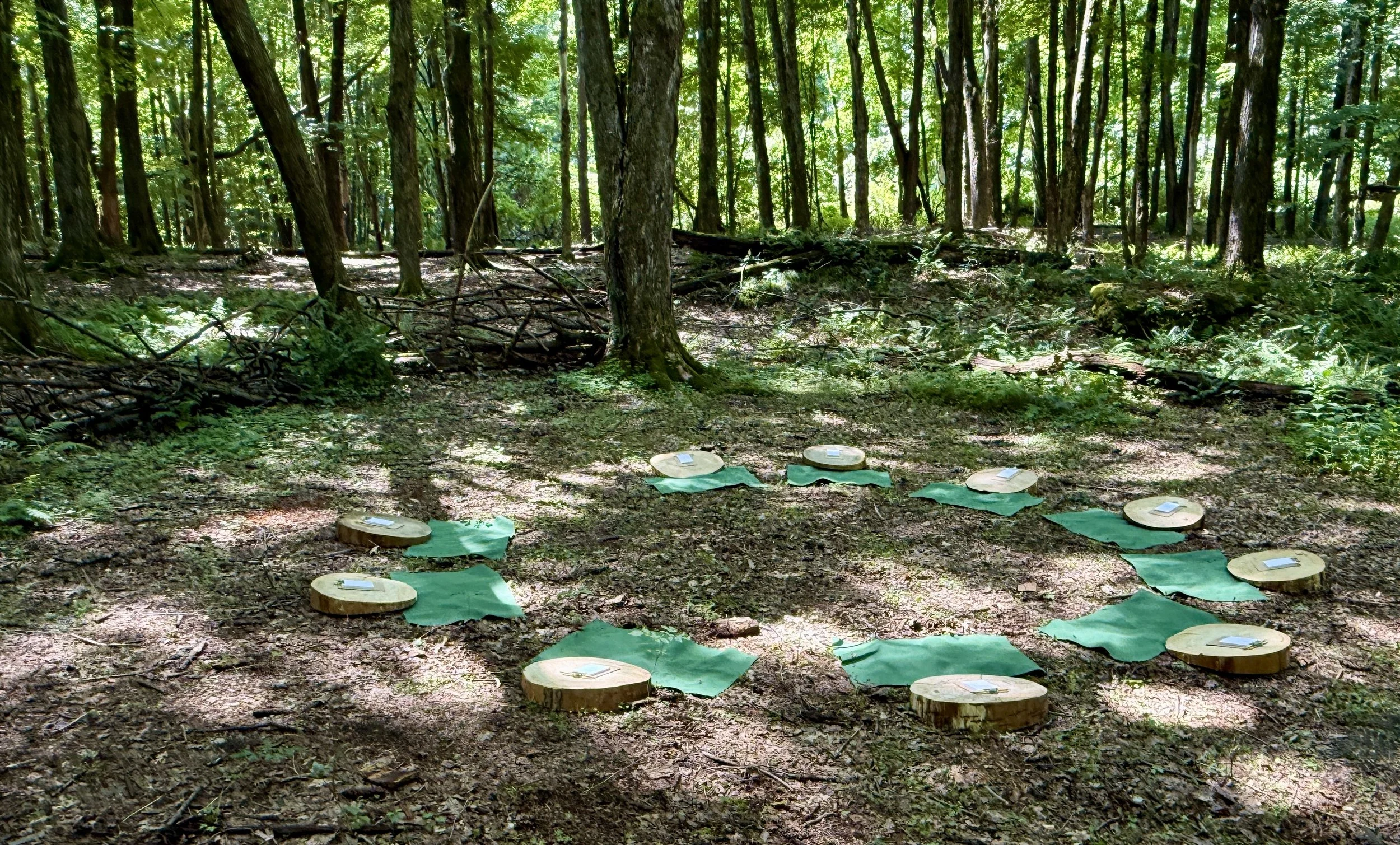
The Classroom of Natural Intelligence in Hopkins Forest (July, 2026)